
Sharing Some Learnings as a Beginner Trader
Some of my Trading related Learnings! I am not a Teacher. I am a Student and a Beginner Trader.
Beginner Trading Discipline & Guidelines
Trading success is built on discipline, preparation, and risk control, not luck or gut feeling.
This guide is designed for beginner traders who want to develop a structured, sustainable approach to trading while protecting their capital.
Daily Trading Routine & Market Preparation
(Specific to Indian Index Trading)
- Wake up by 7:30 am and be ready for trading by 8:15 am.
- Spend at least 45 minutes on pre-market preparation before trading begins.
- Use this time to:
- Observe price charts
- Mark key support and resistance levels
- Review your trading plan
- Prepare mentally for the session
- Ensure you are well-rested and properly fed. Trading while tired or hungry reduces focus and decision quality.
Trade With Logic, Not Gut Feeling
- Trading based on gut feeling often leads to emotional decisions and unnecessary losses.
- Every trade must have a clear technical reason. If there is no valid setup, do not take the trade.
- Markets will offer opportunities for years and decades. Missing one trade is harmless; taking a bad trade is costly.
- If a loss occurs despite a valid setup, analyze it to improve your technical understanding.
Key Levels, Structure & Patience
- Always identify important support and resistance levels before trading.
- Take trades only when price reacts near these levels.
- If price is not respecting your levels, it is better to stay out of the market.
- Avoid FOMO (fear of missing out). More trading opportunities will always come.
Risk Management Rules for Beginner Traders
- Every trade must have a stop loss, without exception.
- Define risk before entering the trade, never after.
- Do not get greedy. Book profits according to your pre-defined plan.
- If your stop loss gets hit repeatedly:
- Stop live trading immediately
- Switch to paper trading
- Resume live trading only after consistency improves
Risk management is the foundation of long-term survival in trading.
Focus, Discipline & Trading Environment
- Avoid all distractions while trading.
- Many losses happen due to:
- Missed entries
- Wrong order placement
- Errors in stop loss or trigger price
- Full focus is essential, especially during high-volatility periods.
Position Sizing & Capital Protection
- Start trading with 1 lot only for the first few months.
- Increase to 1 additional lot only after achieving consistent net profitability.
- Never increase position size after losses.
- Capital preservation is more important than fast profits.
Learning Curve & Trader Mindset
- People spend years becoming engineers or doctors. Becoming even a reasonably good trader also takes time.
- Losses are part of the learning process, but they must be small and controlled.
- After every losing trade, review the reason:
- Ignoring levels
- FOMO
- Greed
- Trading based on news
- Incorrect analysis
- Execution mistakes
- Learning from mistakes builds long-term consistency.
Scalping Rules for Beginner Traders
Scalping is a short-term trading style and should be approached carefully by beginners.
What Is Scalping?
- Scalping refers to very short-duration trades, usually lasting seconds to a few minutes.
- The goal is to capture a small, quick price movement, not the full trend.
- Scalping is defined by time, structure, and volatility, not fixed points.
Scalping Targets
- There is no fixed point target in scalping.
- Targets depend on:
- Instrument traded
- Market volatility
- Price behavior near key levels
- Always use realistic targets based on current market conditions.
Stop Loss in Scalping
- Every scalp trade must have a clearly defined stop loss.
- Avoid extremely tight stop losses in fast markets.
- Stop loss placement should be based on price structure, not fear.
Scalping Discipline
- Scalping requires high concentration and fast execution.
- If you feel tired, distracted, or emotionally unstable, avoid scalping.
- Do not overtrade. Fewer high-quality trades are better than many random trades.
Scalping vs Trend Trading
- Scalping does not aim to capture big or trending moves.
- Exit once the target is achieved.
- Never convert a scalp into a longer trade without a predefined plan.
Market Behaviour & Practical Observations
(Specific to Indian Index Trading)
The following points apply only to Indian index markets such as NIFTY, BANKNIFTY, and FINNIFTY.
- Options prices do not always move strictly according to open interest during the day.
- Near market close, price movement can change rapidly due to institutional and option writer activity.
- Observing the 2:55 pm 5-minute candle (Indian market time) can provide insight into potential movement toward the 3:00 pm close, but it should never be traded in isolation.
- When call writers are active, a strong closing candle above their level is often required for the index to move higher.
- These are contextual observations, not guaranteed signals. Risk management rules always apply.
Consistency Over Intensity
- Work on trading daily, even if only for part of the session.
- You do not need to trade all day to improve.
- Regular observation, journaling, and review are enough to build skill over time.
Trading Setup & Tools
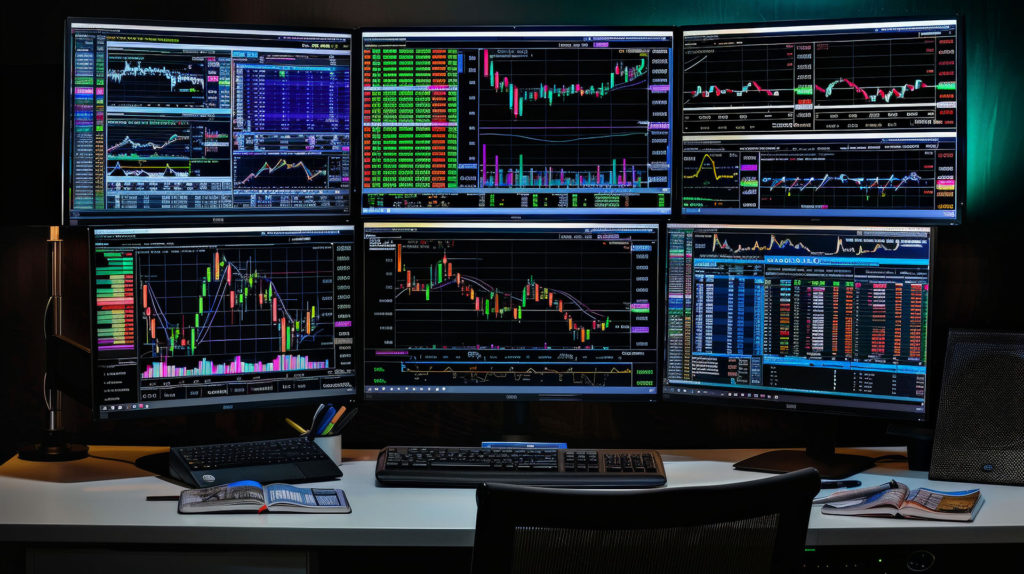
- Use a proper computer-based trading setup.
- You should be able to view multiple charts at the same time, including:
- Index chart
- Call option chart
- Put option chart
- A clean and organized setup improves execution speed and decision-making.
Final Trading Principle
Moving slowly with controlled losses and gradually increasing net profitability is far better than aggressive trading that risks significant capital loss.
Frequently Asked Questions
What is the most important rule for beginner traders?
The most important rule for beginner traders is risk management. Always trade with a predefined stop loss, use small position sizes, and protect capital before focusing on profits.
How much capital should a beginner start trading with?
A beginner should start with only surplus capital, meaning money that is not needed for daily expenses, savings, or emergencies. Never trade with borrowed money or funds required for essential financial commitments.
Is it normal to incur losses as a beginner trader?
Yes. Losses are a normal part of the learning process. The goal for beginners is not to avoid losses completely, but to keep losses small and controlled while improving discipline and technical understanding.
How long does it take to become a profitable trader?
Becoming consistently profitable can take months to several years, depending on learning speed, discipline, and practice. Trading is a skill-based profession, similar to engineering or medicine, and requires patience and continuous improvement.
Should beginners do intraday trading or long-term investing?
Beginners should first focus on learning market structure, risk control, and execution. Intraday trading can be attempted with small size and strict rules, while long-term investing requires separate knowledge and planning. Mixing both without clarity often leads to losses.
Is scalping suitable for beginner traders?
Scalping is not ideal for beginners initially. It requires fast execution, high focus, and strong discipline. Beginners should first practice scalping through paper trading or minimum lot size before attempting it regularly.
How many trades should a beginner take in a day?
There is no fixed number. Beginners should focus on quality over quantity. Even one well-planned trade is enough. Overtrading is one of the most common reasons beginners lose money.
Do options prices always move according to open interest?
No. Options prices do not always move strictly according to open interest, especially during intraday trading. Price action, volatility, institutional activity, and time decay also play important roles.
Is it necessary to watch the market the entire day?
No. It is not necessary to watch the market continuously. Many traders improve by trading or observing only specific time windows, combined with daily review and journaling.
Can trading provide guaranteed income?
No. Trading does not offer guaranteed income. Any person or platform claiming guaranteed profits should be avoided. Trading involves risk and outcomes depend on discipline, skill, and market conditions.
Risk Disclaimer
Trading and investing in financial markets, including equity, derivatives, options, futures, and indices, involve substantial risk and may not be suitable for all investors.
The information provided on this website is for educational and informational purposes only and should not be considered as financial advice, investment advice, trading advice, or a recommendation to buy or sell any financial instrument.
Market conditions can change rapidly, and past performance is not indicative of future results. Losses can exceed initial capital, especially in leveraged products such as options and futures.
Readers are advised to:
Trade only with risk capital
Fully understand the risks involved
Use proper risk management techniques
Consult a SEBI-registered financial advisor before making any trading or investment decisions
The website owner, author, and contributors are not responsible for any financial losses incurred based on the information provided. All trading decisions are made at the reader’s own risk and discretion.